
Free Inquiry #5- Use of Colors
Do classroom colors affect mood and learning outcomes?
Yes, the use of colors in the classroom can significantly influence students’ mood, attention, and learning outcomes, according to a growing body of research from psychology, neuroscience, and educational design. The use of colors can affect the brain, such as the limbic system (emotion regulation) and arousal level. The use of warm and cool tones can either stimulate or calm the brain, influencing focus, creativity, and comfort.
Effects of Specific Colors
| Color | Psychological/Mood Impact | Learning Outcome Effects | Notes |
|---|---|---|---|
| Blue | Calming, improves focus, lowers stress | Enhances reading comprehension and creative thinking | Often recommended for classrooms and libraries |
| Green | Relaxing, balanced, restorative | Improves concentration and reading ability | Associated with nature and mental restoration |
| Yellow | Stimulating, cheerful, increases optimism | Boosts memory retention and motivation in moderate amounts | Too much can cause anxiety or fatigue |
| Red | Energizing, attention-grabbing | Improves detail-oriented tasks but may increase anxiety | Best used as an accent color |
| Orange | Warm, inviting | Encourages social interaction and participation | Can be overstimulating if overused |
| White/Gray | Neutral, clean | Can promote clarity, but overuse feels sterile or cold | Works best balanced with color accents |
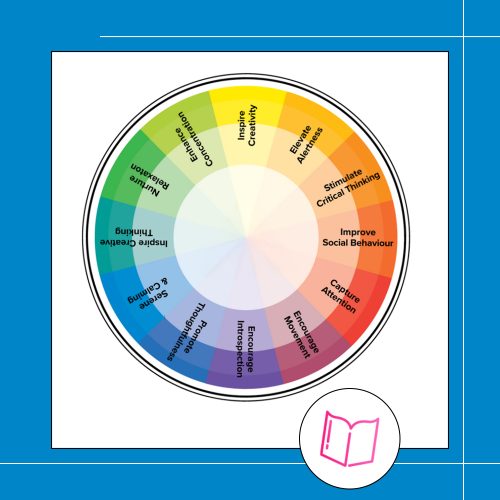
Younger students can benefit from brighter, warmer colors because those shades of colors stimulate engagement.
Older students can often benefit and can perform better in cooler-toned, low-arousal environments that support sustained focus.
Special education classrooms often use muted tones to help reduce the overstimulation of students.
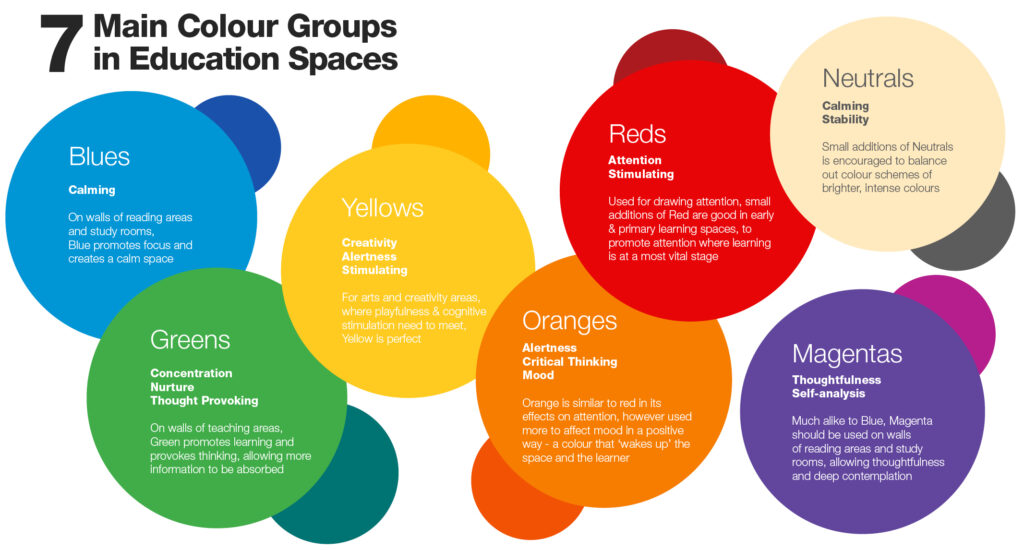
Using different colors in the classroom is important because it can help with improving focus, such as using calming tones (like blue or green) to help students concentrate better and reduce anxiety. To help boost creativity, you want to use bright, warm colors (like yellow or orange) to help stimulate imagination and enthusiasm. To help support emotional well-being, the right colors to use can make the classroom feel welcoming and safe, which encourages participation and positive behaviour for students. But to also organize learning areas with different color zones can help separate learning areas (ex., a blue “reading corner and a yellow “group discussion zone”).
When creating a balanced color environment, you don’t want too much of one color because it can be overwhelming for students, so you want to find a balance. When designing your classroom, you want to use natural or soft colors for large areas such as the walls. Add bright accents in posters, furniture, or decorations to help make the classroom lively. But you also want to take into consideration the age groups, such as younger students benefit more from bright, playful colors, while older students often prefer calmer and more focused tones.